

The Siemens Playbook in Asia: What Every German Industrial Company Can Learn
Updated: Jun 9

How Germany's most globally ambitious manufacturer is redefining industrial leadership across the continent — and the lessons hiding inside its strategy
Asia Is No Longer the Future. It Is the Present.
The numbers leave little room for debate. The Asia-Pacific smart manufacturing market was valued at $53.8 billion in 2025 and is projected to reach $221.1 billion by 2035, growing at a compound annual rate of 15.3%. That is not a forecast about a distant horizon — it is a description of a market already in full acceleration, drawing capital and technology leadership from every major industrial nation on earth.
Germany's most prominent industrial company has understood this for decades. Siemens is not preparing for Asia's rise. It is already shaping it.
From Electrification to the Industrial Metaverse — in Asia First
Siemens has been present in Asia for over a century, but its current strategic posture is categorically different from anything that came before. The company is no longer simply exporting German engineering to Asian factories — it is building the digital architecture that will run Asian industry for the next generation.
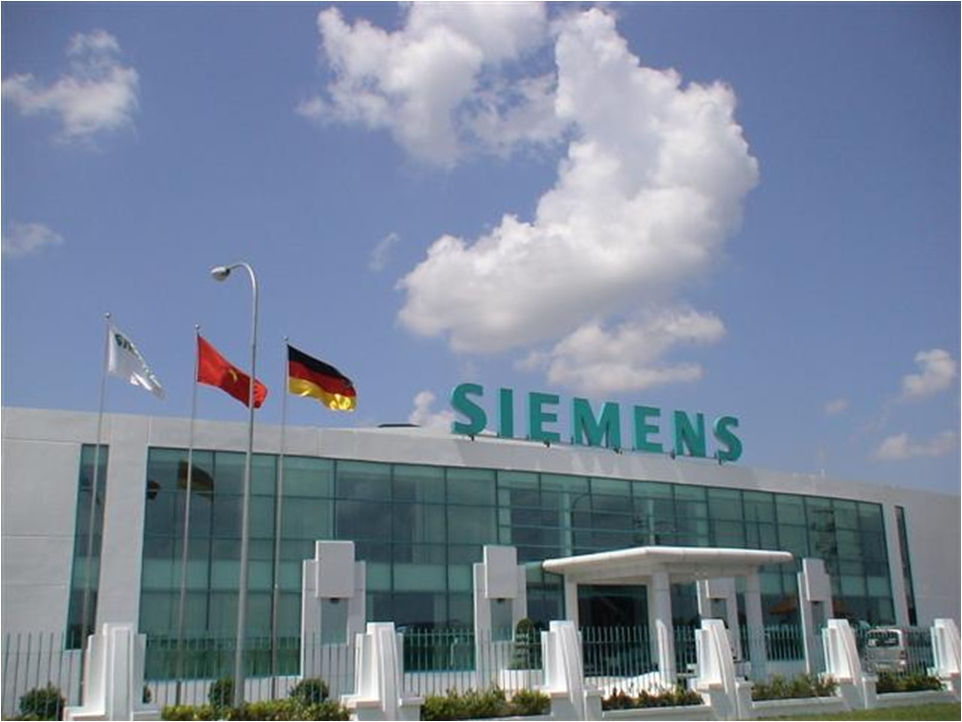
Siemens' digital factory in Nanjing has been named a "Lighthouse" by the World Economic Forum, recognising its leadership in applying Fourth Industrial Revolution technologies — including artificial intelligence and data analytics. The Lighthouse designation, awarded to fewer than 200 factories worldwide, marks a facility as a global benchmark for Industry 4.0 implementation. That Siemens has achieved this in China — not in Germany — signals precisely where the industrial frontier is moving.
Siemens' overarching strategy is built on combining the real and the digital worlds, and Asia is where that convergence is happening at the greatest speed and scale. Digital twins, industrial AI and intelligent automation are not pilot programmes in the region — they are already operational across automotive, electronics, energy and infrastructure projects from Hanoi to Jakarta to Mumbai.
ASEAN: The Strategic Bet That Is Already Paying Off
Within Asia, Siemens has made a particularly decisive commitment to Southeast Asia. In July 2025, A*STAR and Siemens formalised a partnership aimed at advancing innovation and digital transformation for smart and sustainable manufacturing within Singapore and throughout the ASEAN region. Siemens became the first technology partner for A*STAR's Smart and Sustainable Advanced Manufacturing (SSAM) Catalyst — providing an integrated portfolio spanning automation, electrification, industrial software and artificial intelligence across the full product lifecycle.
This is not a marketing partnership. It positions Siemens as the reference architecture for how ASEAN manufacturers digitise — meaning that when a Thai automotive supplier, a Vietnamese electronics assembler or an Indonesian food producer decides to upgrade its operations, Siemens is the default benchmark against which every other solution is measured.
Dr. Thai-Lai Pham, President and CEO of Siemens ASEAN and Vietnam, has led the company's expansion since 2012 — from power generation and industrial automation to digitalised grids, smart factories and intelligent mobility solutions — positioning Siemens as a key infrastructure partner and one of the most successful multinational companies in Vietnam. That is thirteen years of continuous, compounding commitment to a single region. The returns are structural, not transactional.
China: Doubling Down, Not Retreating
While many Western companies have been reducing their China exposure, Siemens has taken a more nuanced position — selectively deepening its presence in strategically important areas. Siemens Energy became the first foreign manufacturer to break ground in the Hainan Free Trade Zone following its official launch in December 2025, establishing Siemens Energy (Hainan) Co., Ltd. — both its first gas turbine assembly site in China and Hainan's first foreign-funded manufacturing project since the zone's launch.
This is a calculated move into the geographic gateway between China and Southeast Asia — a region explicitly designed to serve as a logistics and manufacturing bridge between Chinese industrial capacity and ASEAN market access. Siemens is not just present in Asia's individual markets. It is positioning itself at the intersections between them.
Record Results Built on Asian Ambition
The financial outcomes validate the strategy. Siemens reported record net income of €10.4 billion in fiscal 2025 — a historic high for the third consecutive year — with the company expecting comparable revenue growth of 6% to 8% for fiscal 2026. The Asia business is a meaningful contributor to this performance, and the order backlog of €117 billion gives forward visibility that most industrial companies would envy.
Siemens' executive leadership has identified the convergence of AI, digital twins and sustainability as the three core pillars of industrial innovation going forward, and it is Asia — specifically India, China, Vietnam and the ASEAN bloc — where these pillars are being stress-tested at real industrial scale.
What This Means for the German Mittelstand
The Siemens model in Asia contains a lesson that does not require a €75 billion revenue base to apply. Several principles translate directly to medium-sized German industrial companies:
Commit to a region, not just a transaction. Siemens' strength in Vietnam is the product of over thirty years of consistent presence, relationship-building and local partnerships — built since the official establishment of its office in 1993, with roots going back to 1979. No single export contract achieves that. German SMEs that approach Asian markets as one-time trade opportunities consistently underperform against competitors who invest in structural presence.
Local partnerships are the operating system. Siemens entered Southeast Asia by forming local partnerships with manufacturing firms and governments, partnering with Vietnam's Ministry of Industry and Trade to introduce automation solutions and collaborating with leading Thai companies to implement Industry 4.0 technologies. Every German company entering Asia needs the equivalent — a trusted local partner who translates not just language, but context.
The technology gap closes faster than you expect. Asian manufacturers are not waiting passively to adopt Industry 4.0 — they are building greenfield facilities with digital twins and AI-driven production systems from day one. A German company arriving with yesterday's technology proposition will find the conversation has already moved on.
First-mover positioning in a rising market compounds. Siemens' Lighthouse factory in Nanjing, its A*STAR partnership in Singapore and its Hainan Energy facility were not obvious decisions at the time they were made. They are obvious in retrospect. The same logic applies to the markets and partnerships that other German industrial companies are still deferring.
The Takeaway
Siemens has not succeeded in Asia because it is large. It has succeeded because it committed early, partnered intelligently, adapted its model to local realities and understood that industrial leadership in the 21st century is built where the factories are being built — not where they have always been.
That geography is Asia. The best time to act on it was ten years ago. The second-best time is now.
Global Met GmbH supports German industrial companies in identifying the right partners, markets and entry strategies across Asia and beyond. Contact us to discuss your next step.
info@global-met.de · Dortmund, Germany


Comments